Monday, March 30, 2020
The Painted Veil - God brings good out of an epidemic
Beautifully filmed, skillfully acted, and powerfully meaningful in many ways...this is an overlooked gem of a movie that I highly recommend, especially in light of the current coronavirus crisis. Because of that crisis parts of the movie will not be pleasant to watch, and it may be undesirable altogether for some, but if you can brave the horrors of a deadly epidemic on screen for a couple hours, you will be rewarded with some great and hopeful examples of how good can and does come from such unfortunate circumstances.
I suggest that you watch the movie first and then come back to read my spoiler review below, but before you do let me say something about its content, especially related to children. Fortunately I was able to record it to a DVD several years ago when I had that capability, so I was able to make an edited version with the unnecessary sex and nudity cut out of it, and that's what I showed to my nine and eleven year-old daughters. I'm glad I could do that, because it provoked a lot of good discussion and taught them some important lessons about the nature of true love (as opposed to lust and infatuation), repentance and forgiveness, priorities in life, the path to happiness, self-sacrifice, how God can bring good out of tragedy and suffering (as I mentioned), and other issues. It's unlikely that you will be able to watch an edited version (the one company I know who sells them doesn't offer this movie), so I will tell you where the scenes are in case you want to watch it with children and fast forward those parts. The first one is not long after Kitty and Charlie talk at the theater and when you see their shoes on the floor--it lasts about 40 seconds. The second one occurs late in the movie after Walter and Kitty are drinking at the British man's house and return home--it lasts a little over two minutes. You can simply tell your kids what happens in those scenes, like I did--they don't have to witness it in order to know the significance of what's going on.
For most adults, I don't think what is depicted will be a problem, unless brief views of a women's slip or men's naked behinds are a temptation for you. So watch the movie, thinking about the issues that I just mentioned, and then come back here for some spoiler thoughts from me about it, because I have some interesting insights that you might not catch upon first viewing it--at least my wife and daughters didn't see them until I pointed them out.
The first and most important insight is about the spiritual and religious subtext in the movie. I say "subtext" because on the surface there is very little religion--in fact, Kitty tells the head nun at the orphanage that she doesn't believe much of anything and Walter says of the nuns, "They didn't convert you, did they?" But even those scenes, which seem initially to dismiss religious faith, contain subtle elements that affirm it. Walter's face expresses disappointment when Kitty says no to the question of being converted, for example--I think he was hoping against hope that something like that would happen to her, because after all revenge was not his only reason to bring her with him to a cholera zone. He clearly harbored hope that she would change and there would be a chance for them to love again; otherwise he would have simply divorced her as he had every right to do.
Other examples of subtle spiritual content can be found in the final lines of each main character. Walter's last words are a plea for forgiveness from Kitty, which implies that he had been seeking forgiveness first from God as he lay dying. Only by recognizing his sins of pride and bitterness before the Lord could he have seen his need for forgiveness from her. And one of Kitty's final lines in the movie is to affirm (contrary to one of her earliest lines, well before her repentance) that the beauty and fragrance of flowers is still worth it even though they live such short lives. Though I don't think the filmmakers meant this to happen, that line made me think of what Jesus said in John 12:25: "Unless a grain of wheat falls into the earth and dies, it remains alone; but if it dies, it bears much fruit."
The second half of that verse is definitely illustrated well in both Walter's sacrifice on behalf of the Chinese people and Kitty's experiences in the orphanage and at Walter's deathbed: "Whoever loves his life loses it, and whoever hates his life in this world will keep it for eternal life." They both learn that true "quality of life" lies in giving up your own desires and pleasures for the good of others, and I like to think that they also learned to do so for the glory of God. Like the filmmakers, the author of the source novel (W. Somerset Maugham) was not a Christian, but he lived in a largely Christian culture and unquestionably traded off on Christian themes. Therefore what is depicted about these characters fits well with the Christian doctrines of Divine love (agape), Fatherly discipline, repentance, forgiveness, and redemption. It is no crime against the art or artist to view the events of the film through those lenses, and it can be a wonderful blessing to do so.
Monday, December 30, 2019
A Christmas Carol is Really a Christianity Carol
So I highly recommend the movie (at any time of year), but I also wanted to tell you, if you didn't already know (like many don't), that the appreciation for Christmas encouraged in the story is really a metaphorical paean to Christianity itself (and especially the beneficent spirit at its core, of course).
Whatever his personal moral weaknesses may have been--and the modern-day claims about them are far from unquestionable--Dickens very clearly professed to be a Christian. For a thorough discussion of his faith, see God and Charles Dickens by Gary Colledge, but here are a few interesting examples of the overwhelming evidence:
The final paragraph of Dickens' last will and testament include these words: "I commit my soul to the mercy of God through our Lord and Saviour Jesus Christ, and I exhort my dear children humbly to try to guide themselves by the teaching of the New Testament."
The last letter he ever wrote contains this: "I have always striven in my writings to express veneration for the life and lessons of our Saviour; because I feel it; and because I re-wrote that history for my children—every one of whom knew it from having it repeated to them—long before they could read, and almost as soon as they could speak.”
The book about Christ that Dickens refers to is The Life of Our Lord, a manuscript that he wrote for his children and personally read to them every year at Christmas time. The book begins: “My Dear Children, I am very anxious that you should know something about the History of Jesus Christ. For everybody ought to know about Him. No one ever lived who was so good, so kind, so gentle, and so sorry for all people who did wrong, or were in any way ill or miserable, as He was.” One notable feature of the book is that Dickens recounted many of the miracle stories from the gospels and clearly believed they actually happened, which provides an important context for the visits to Unitarian churches that cause some to question his evangelical faith.
And in Christmas Carol itself, of course, Dickens puts these words into the mouth of his most admirable character, Tiny Tim ("faith like a child"): his father says after their trip to church, "Somehow he gets thoughtful, sitting by himself so much, and thinks the strangest things you ever heard. He told me, coming home, that he hoped the people saw him in the church, because he was a cripple, and it might be pleasant to them to remember upon Christmas day who made lame beggars walk, and blind men see."
Speaking of church, that's the important part of Dickens' novel that is almost always left out of the adaptations, no matter how faithful they are otherwise. At the end, when Scrooge is converted, one of the first things he does is go to church! Check out the novel--it's there. The great author was not only using his powerful sentimentalist verbal armory to advocate a rediscovery of a holiday--he was saying we all should rejoice in the biblical truths that occasioned it in the first place.
Thursday, June 28, 2018
The Novella: A Great Idea Whose Time Has Come
In The New Yorker on
October 29, 2012, the Booker Prize winning author Ian McEwan wrote, “I believe
the novella is the perfect form of prose fiction.”
Even if that’s an overstatement, McEwan’s article
makes a great case that the novella is an important and beneficial form of
literature. So why are works of fiction with a length somewhere between short
stories and novels almost never published, unless they’re by a famous author?
The main reason is that prior to modern publishing
innovations like eBooks and on-demand production, thousands of copies of every
book had to be printed, and novellas were too short and inexpensive for
publishers to turn a profit on them (unless they were by a famous author and therefore
guaranteed to sell enough copies). But those new publishing capabilities have
made the printing cost a relatively moot issue, so the novella is now primed to
become as prevalent and appreciated as its counterparts.
We may be at the dawn of a revolution in fiction
publishing—the “Day of the Novella”—and Cruciform Press is hoping to be a
pioneer in this new age like it has been with short,
practical non-fiction books during the last decade. On July 25 we’ll be
releasing the first three novellas in our
new fiction line.
Perhaps you’ve thought of some other reasons why there aren’t
many novellas in print. For example, an avid reader I know once complained that
a short novel is a mere “snack” to her, because she likes to read long epics.
But what’s wrong with a good snack? Krispy Kreme donuts are a snack, and so are
ice cream and Doritos (or whatever kind of chips you prefer)—even Starbucks. So
that shouldn’t be a criticism or reason to abstain from novellas, and they’re
not even bad for your health!


We might assume that novellas are somehow inferior to novels
because they’re shorter, but McEwan addresses that issue very well in the
larger section surrounding the quote above:
Composers, including those of the
highest rank, have never had such problems of scale. Who doubts the greatness
of Beethoven’s piano sonatas and string quartets or of Schubert’s songs? Some,
like me, prefer them to the symphonies of either man. Who could harden his
heart against the intimate drama of Mozart’s G minor trio, or not lose himself
in the Goldberg variations or not stand in awe of the D minor Chaconne played
on a lonesome violin?
Strangely, the short story never
arouses suspicion of short-changing, probably because the form is so
fundamentally different from the novel.
I believe the novella is the perfect
form of prose fiction. It is the beautiful daughter of a rambling, bloated,
ill-shaven giant (but a giant who’s a genius on his best days). And this child
is the means by which many first know our greatest writers. Readers come to
Thomas Mann by way of “Death in Venice,” Henry James by “The Turn of the
Screw,” Kafka by “Metamorphosis,” Joseph Conrad by “Heart of Darkness,” Albert
Camus by “L’Etranger.” I could go on: Voltaire, Tolstoy, Joyce, Solzhenitsyn.
And Orwell, Steinbeck, Pynchon. And Melville, Lawrence, Munro. The tradition is
long and glorious. I could go even further: the demands of economy push writers
to polish their sentences to precision and clarity, to bring off their effects
with unusual intensity, to remain focused on the point of their creation and
drive it forward with functional single-mindedness, and to end it with a mind
to its unity. They don’t ramble or preach, they spare us their quintuple
subplots and swollen midsections.
Novellas not only promote economy and unity in writing, but they are a perfect medium for a generation of readers who have shorter attention spans and love movies (a screenplay is around the same length as a novella).
Wednesday, February 21, 2018
Some good books (including one for fans of the Black Panther movie)
Here are a few examples of good books I've read recently. I'd like to have a site just devoted to book reviews from a Christian perspective, because there is a real scarcity of such sites out there. (Are there any at all, in fact? Let me know if you are aware of any.) But I'm too busy to start a new site, and "Voracious" and "VoraciousReader" are both taken as site names (bummer!). So I'll just put some recommendations on this blog from time to time, for movies and music as well as books, and hope somebody benefits from them.
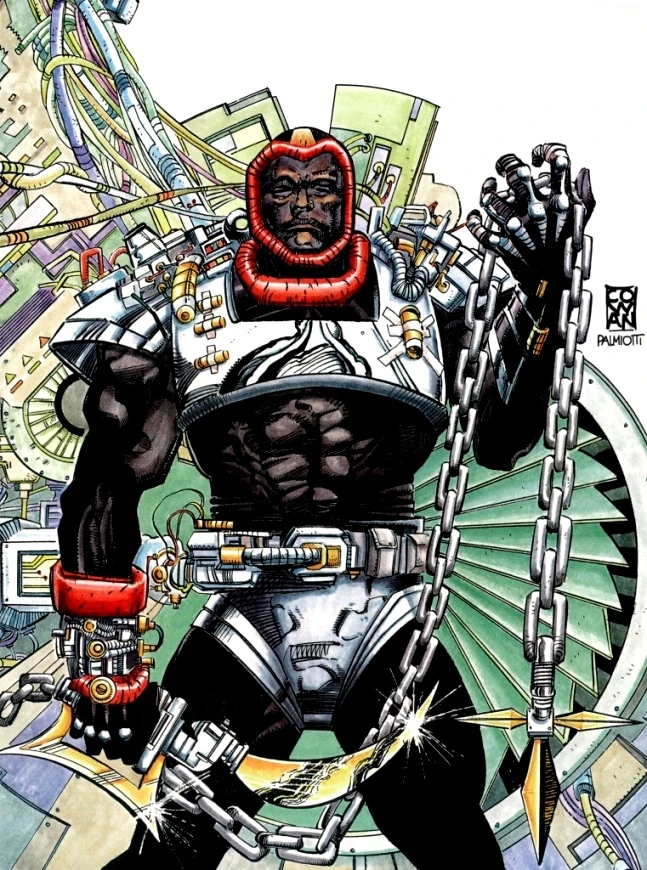
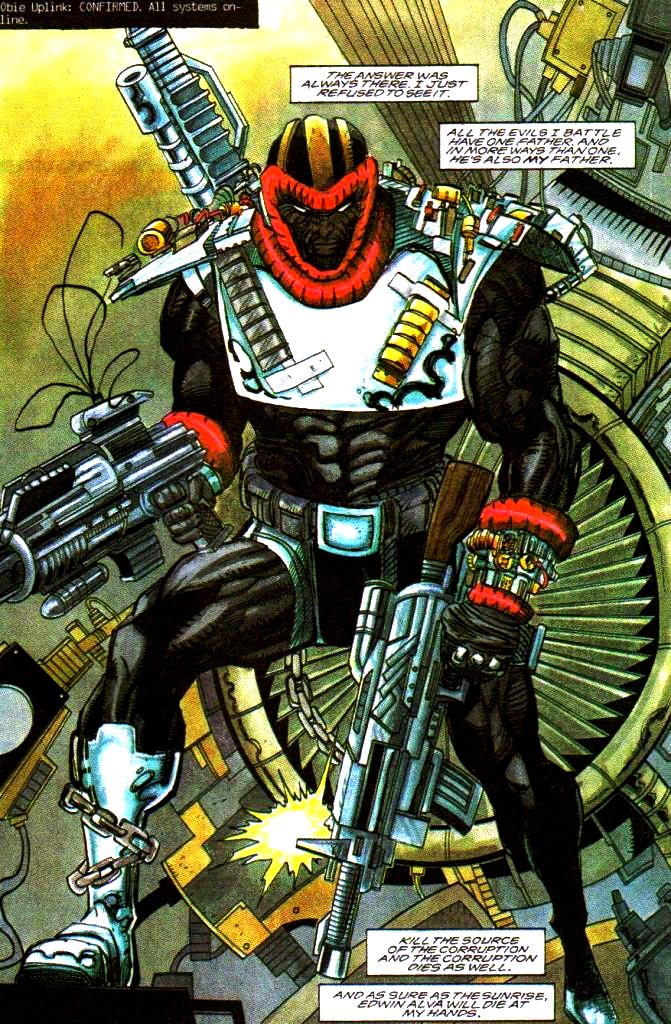
This is a really cool graphic novel, by African-American creators, collecting a comics series from years ago that only lasted about 10 issues. But it's got great art by Denys Cowan and beautiful coloring (a rather unique look), and the extra bonus that makes this book special is the theme of revenge vs. justice. The hero, who is more of an anti-hero at first, actually progresses in character development as the story goes, with the arc coming to a satisfying conclusion, especially for those who care about the truth. If you like the Black Panther movie and want to check out some more popular art by African Americans, or if you just like a good story with cool art, you can get Hardware here or here.


This is a "normal" book (not a graphic novel) that I bought at a thrift store because I thought the cover looked good and it sounded like an interesting premise...a future Moscow ravaged by civil war and a serial killer who may be more than he (or she) seems. The author is a historian who is an expert on Russia, so all that happens in the novel is probably possible. If you can stand the constant profanity (Russian style) from some of the characters and the anti-hero's often anti-heroic actions, an illustration of God's grace emerges eventually as He uses an unlikely and undeserving tool to save the country. Along the way, twists and turns keep you turning the pages. You can get it (for really cheap) here.

Hardware: The Man in the Machine, by McDuffie and Cowan
This is a really cool graphic novel, by African-American creators, collecting a comics series from years ago that only lasted about 10 issues. But it's got great art by Denys Cowan and beautiful coloring (a rather unique look), and the extra bonus that makes this book special is the theme of revenge vs. justice. The hero, who is more of an anti-hero at first, actually progresses in character development as the story goes, with the arc coming to a satisfying conclusion, especially for those who care about the truth. If you like the Black Panther movie and want to check out some more popular art by African Americans, or if you just like a good story with cool art, you can get Hardware here or here.


****************

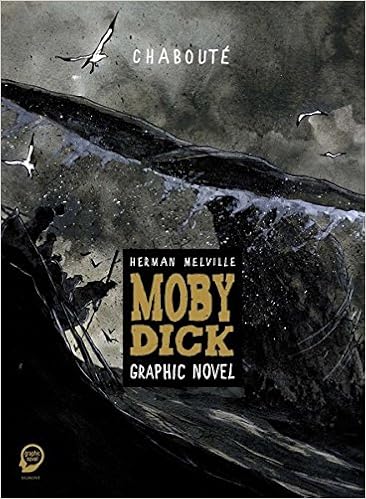
Moby Dick Graphic Novel, by Chaboute
I asked for this book as a Christmas present, because the art looked cool and I've had difficulty getting through the whole original text of Moby Dick, so I thought a graphic novel version would be more doable for me. It was, and I found both my imagination and my soul stirred by this classic tale. It struck me that it's essentially an Old Testament story, complete with portentous prophecies, God's judgment on idolatry (in various forms), and, of course, a whale (but it's not the Book of Jonah). Melville's religious syncretism bleeds through at times, but so does the biblical truth he was steeped in, and there's much more of the latter in the story. French creator Chaboute doesn't bring out even close to all of the Christian elements of the original book, but he can't be faulted for that because of the abridgment. Some of it is there, though, and that along with the beautiful art--effective in black and white--makes this a worthwhile read. You can get it here.


***************

Monstrum, by Donald James
This is a "normal" book (not a graphic novel) that I bought at a thrift store because I thought the cover looked good and it sounded like an interesting premise...a future Moscow ravaged by civil war and a serial killer who may be more than he (or she) seems. The author is a historian who is an expert on Russia, so all that happens in the novel is probably possible. If you can stand the constant profanity (Russian style) from some of the characters and the anti-hero's often anti-heroic actions, an illustration of God's grace emerges eventually as He uses an unlikely and undeserving tool to save the country. Along the way, twists and turns keep you turning the pages. You can get it (for really cheap) here.
Wednesday, September 6, 2017
The Mystery of Mystery Novels
The mystery of mystery novels is how to find a good one! I love Raymond Chandler's Phillip Marlowe stories from the 1940s (The Big Sleep, The Long Goodbye, etc.), but I can only re-read them every couple years when I've forgotten the plots, and so in between I've been searching far and wide for other good ones (mostly in libraries and used book stores). As in most categories of art and entertainment, I've only found about one in a hundred that I like. I usually stop reading them shortly after I start, because they just don't draw me in enough, they're not my kind of thing, or they have too much offensive material. But once in a while I find a "keeper," so I thought I could save you some time searching yourself by telling you about a few that I liked...
Gone Tomorrow by Lee Childs is one of his many Jack Reacher novels. I've read several others in the series, and they have pulled me in, but I was not pleased with the total product, partially because of uneven quality but also because Jack Reacher is so often amoral and immoral. Gone Tomorrow is consistently good and mostly unoffensive, except for the one brief but totally unnecessary episode of fornication toward the end. Fortunately it is not described graphically...but why do authors have to throw sex into every story?! Do they think that a relationship can't be good or complete without it? Anyway, the story is very interesting, the hero has some good qualities, and the cover is soooo cool-looking! (Yes, the way a book looks is important to me, and yes, I know I'm weird that way.) [The next Reacher book, 61 Hours, is also very good, if you can stand the fact that it ends on a bit of a cliffhanger.]

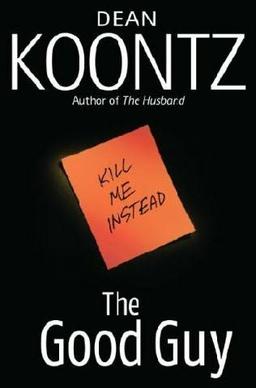
The Good Guy by Dean Koontz was a good read. I've tried several other books by Koontz and have only finished one (The Husband, which was underwhelming, especially at the end). But I thought The Good Guy kicked some derriere...probably largely because of my Christian sensibilities... the main character is actually a good guy, for goodness sake, and that was refreshing in this age of the anti-hero. I have to admit the end was a bit anticlimactic, but at least it was satisfying, and the ride to there was great. Check this one out.
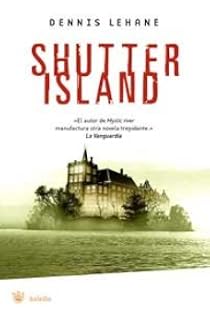
Shutter Island by Dennis Lehane kept me turning page after page to find out what in the world was going on...it was certainly successful by that standard. But it also raised some interesting issues about mental health, psychiatry, and even psychopharmocology that I enjoy mulling over. I tried a couple of his older private eye novels (A Drink Before the War, Prayers for Rain) but can't recommend them because the protagonists are so depraved and the ultimate "lessons" are so nihilistic or hedonistic. But though Shutter Island definitely shared some of the nihilism, it is more well directed at the depravity of man and his hopeless attempts to cure "mental problems" without God.

Gone Tomorrow by Lee Childs is one of his many Jack Reacher novels. I've read several others in the series, and they have pulled me in, but I was not pleased with the total product, partially because of uneven quality but also because Jack Reacher is so often amoral and immoral. Gone Tomorrow is consistently good and mostly unoffensive, except for the one brief but totally unnecessary episode of fornication toward the end. Fortunately it is not described graphically...but why do authors have to throw sex into every story?! Do they think that a relationship can't be good or complete without it? Anyway, the story is very interesting, the hero has some good qualities, and the cover is soooo cool-looking! (Yes, the way a book looks is important to me, and yes, I know I'm weird that way.) [The next Reacher book, 61 Hours, is also very good, if you can stand the fact that it ends on a bit of a cliffhanger.]

The Good Guy by Dean Koontz was a good read. I've tried several other books by Koontz and have only finished one (The Husband, which was underwhelming, especially at the end). But I thought The Good Guy kicked some derriere...probably largely because of my Christian sensibilities... the main character is actually a good guy, for goodness sake, and that was refreshing in this age of the anti-hero. I have to admit the end was a bit anticlimactic, but at least it was satisfying, and the ride to there was great. Check this one out.

The Good Fight, Henry V Style! (Plus...What if Hamlet had gone to Wittenberg?)
Shakespeare's work, as much as any other, embodies what I mean when I say "Truth is no stranger to fiction." His plays are are filled with illustrations of biblical principles, two of which stood out for me recently as I revisited a few of my favorites.
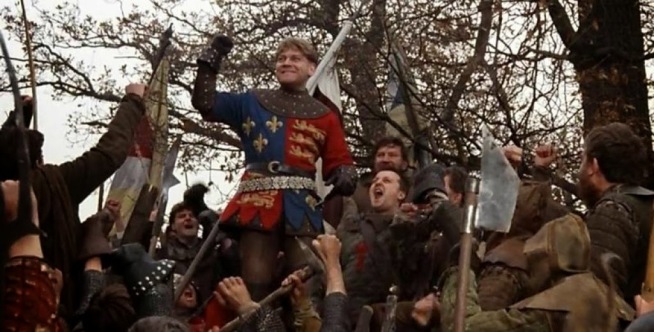
First, Henry V provides a wealth of insight into how we can "fight the good fight," as Paul tells Timothy in 1 Timothy 1:18, and how we can motivate others to do so. When I think about the spiritual warfare we face, Shakespeare's words in Henry V often come to mind... "Once more unto the breach!" Here's that part of the play, with King Henry leading his troops at the battle of Harfleur:
Once more unto the breach, dear friends, once more;
Or close the wall up with our English dead.
In peace there's nothing so becomes a man
As modest stillness and humility:
But when the blast of war blows in our ears,
Then imitate the action of the tiger!

Then later, at the battle of Agincourt, in the famous "St. Crispian's Day" speech, notice especially the different ways that Henry motivates his troops, and imagine that God is using these ideas to engage you in the real ongoing battle against the world, the flesh, and the devil...
WESTMORELAND.
O that we now had here
But one ten thousand of those men in England
That do no work to-day!
KING.
What's he that wishes so? My cousin Westmoreland?
No, my fair cousin.
If we are mark'd to die, we are enow
To do our country loss; and if to live,
The fewer men, the greater share of honour.
God's will! I pray thee, wish not one man more.
By Jove, I am not covetous for gold,
Nor care I who doth feed upon my cost;
It yearns me not if men my garments wear;
Such outward things dwell not in my desires;
But if it be a sin to covet honour,
I am the most offending soul alive.
No, faith, my coz, wish not a man from England.
God's peace! I would not lose so great an honour
As one man more, methinks, would share from me
For the best hope I have. O, do not wish one more!
Rather proclaim it, Westmoreland, through my host,
That he which hath no stomach to this fight,
Let him depart. His passport shall be made,
And crowns for convoy put into his purse.
We would not die in that man's company
That fears his fellowship to die with us.
This day is call'd the feast of Crispian.
He that outlives this day, and comes safe home,
Will stand a tip-toe when this day is named,
And rouse him at the name of Crispian.
He that shall live this day, and see old age,
Will yearly on the vigil feast his neighbours,
And say, "To-morrow is Saint Crispian."
Then will he strip his sleeve and show his scars,
And say, "These wounds I had on Crispian's day."
Old men forget; yet all shall be forgot,
But he'll remember with advantages
What feats he did that day. Then shall our names,
Familiar in his mouth as household words,
Harry the King, Bedford, and Exeter,
Warwick and Talbot, Salisbury and Gloucester,
Be in their flowing cups freshly rememb'red.
This story shall the good man teach his son;
And Crispin Crispian shall ne'er go by,
From this day to the ending of the world,
But we in it shall be remembered,
We few, we happy few, we band of brothers.
For he to-day that sheds his blood with me
Shall be my brother; be he ne'er so vile,
This day shall gentle his condition;
And gentlemen in England now a-bed
Shall think themselves accurs'd they were not here,
And hold their manhoods cheap whiles any speaks
That fought with us upon Saint Crispin's day.

As you read that, did you notice all the different ways that Henry motivated his men? (If not, go back and see if you can identify them...it's fun!). He did so by the promise of reward, the shame of cowardice, personal satisfaction for the present and the future, leaving a legacy to the next generation, friendship and community with others, redemption from past sins, and a sense of great accomplishment. I love all those aspects of the speech because they all reflect biblical motivations that the Scriptures provide for us as well! That's why you should "fight the good fight, keeping faith and a good conscience," as Paul told Timothy.
Secondly, revisiting Hamlet reminded me of a pet theory of mine, which is about how Shakespeare and the Reformation are more related to one another than a cursory observer might think. I would love to write a paper/article on this issue sometime, if I ever become disabled or otherwise end up with the time I would need to write everything I want to! But I'll give you a little taste here...
The Bard lived in a post-Reformation England, of course, and although he dabbled in Roman Catholicism (a "rebel heart" manifesting itself?), he no doubt was influenced by the brighter lights of the Protestant movement (and perhaps inspired to some of his biting satire by the darker parts). One of the most interesting examples of this, that almost no one is aware of, is in the beginning scenes of Hamlet, where he makes the point at least twice (it might be three times, I can't remember right now) that the young prince of Denmark was headed to school in Wittenberg--yes, the same German city where Luther had taught--before his evil uncle talked him into staying at the castle. The implication, to me at least, is that if Hamlet would have gone to Wittenberg, he would have learned about the grace of the cross and all the tragedies in this tragedy would have been avoided! In case you think that's too much of a stretch, I would add that Horatio, who represents the moral compass of the play (notice he's the only character who remains pure), was already enrolled in the school at Wittenberg and had spent the previous year there. It's all in the play...check it out some time if you don't believe me!

First, Henry V provides a wealth of insight into how we can "fight the good fight," as Paul tells Timothy in 1 Timothy 1:18, and how we can motivate others to do so. When I think about the spiritual warfare we face, Shakespeare's words in Henry V often come to mind... "Once more unto the breach!" Here's that part of the play, with King Henry leading his troops at the battle of Harfleur:
Once more unto the breach, dear friends, once more;
Or close the wall up with our English dead.
In peace there's nothing so becomes a man
As modest stillness and humility:
But when the blast of war blows in our ears,
Then imitate the action of the tiger!

Then later, at the battle of Agincourt, in the famous "St. Crispian's Day" speech, notice especially the different ways that Henry motivates his troops, and imagine that God is using these ideas to engage you in the real ongoing battle against the world, the flesh, and the devil...
WESTMORELAND.
O that we now had here
But one ten thousand of those men in England
That do no work to-day!
KING.
What's he that wishes so? My cousin Westmoreland?
No, my fair cousin.
If we are mark'd to die, we are enow
To do our country loss; and if to live,
The fewer men, the greater share of honour.
God's will! I pray thee, wish not one man more.
By Jove, I am not covetous for gold,
Nor care I who doth feed upon my cost;
It yearns me not if men my garments wear;
Such outward things dwell not in my desires;
But if it be a sin to covet honour,
I am the most offending soul alive.
No, faith, my coz, wish not a man from England.
God's peace! I would not lose so great an honour
As one man more, methinks, would share from me
For the best hope I have. O, do not wish one more!
Rather proclaim it, Westmoreland, through my host,
That he which hath no stomach to this fight,
Let him depart. His passport shall be made,
And crowns for convoy put into his purse.
We would not die in that man's company
That fears his fellowship to die with us.
This day is call'd the feast of Crispian.
He that outlives this day, and comes safe home,
Will stand a tip-toe when this day is named,
And rouse him at the name of Crispian.
He that shall live this day, and see old age,
Will yearly on the vigil feast his neighbours,
And say, "To-morrow is Saint Crispian."
Then will he strip his sleeve and show his scars,
And say, "These wounds I had on Crispian's day."
Old men forget; yet all shall be forgot,
But he'll remember with advantages
What feats he did that day. Then shall our names,
Familiar in his mouth as household words,
Harry the King, Bedford, and Exeter,
Warwick and Talbot, Salisbury and Gloucester,
Be in their flowing cups freshly rememb'red.
This story shall the good man teach his son;
And Crispin Crispian shall ne'er go by,
From this day to the ending of the world,
But we in it shall be remembered,
We few, we happy few, we band of brothers.
For he to-day that sheds his blood with me
Shall be my brother; be he ne'er so vile,
This day shall gentle his condition;
And gentlemen in England now a-bed
Shall think themselves accurs'd they were not here,
And hold their manhoods cheap whiles any speaks
That fought with us upon Saint Crispin's day.

As you read that, did you notice all the different ways that Henry motivated his men? (If not, go back and see if you can identify them...it's fun!). He did so by the promise of reward, the shame of cowardice, personal satisfaction for the present and the future, leaving a legacy to the next generation, friendship and community with others, redemption from past sins, and a sense of great accomplishment. I love all those aspects of the speech because they all reflect biblical motivations that the Scriptures provide for us as well! That's why you should "fight the good fight, keeping faith and a good conscience," as Paul told Timothy.
Secondly, revisiting Hamlet reminded me of a pet theory of mine, which is about how Shakespeare and the Reformation are more related to one another than a cursory observer might think. I would love to write a paper/article on this issue sometime, if I ever become disabled or otherwise end up with the time I would need to write everything I want to! But I'll give you a little taste here...
The Bard lived in a post-Reformation England, of course, and although he dabbled in Roman Catholicism (a "rebel heart" manifesting itself?), he no doubt was influenced by the brighter lights of the Protestant movement (and perhaps inspired to some of his biting satire by the darker parts). One of the most interesting examples of this, that almost no one is aware of, is in the beginning scenes of Hamlet, where he makes the point at least twice (it might be three times, I can't remember right now) that the young prince of Denmark was headed to school in Wittenberg--yes, the same German city where Luther had taught--before his evil uncle talked him into staying at the castle. The implication, to me at least, is that if Hamlet would have gone to Wittenberg, he would have learned about the grace of the cross and all the tragedies in this tragedy would have been avoided! In case you think that's too much of a stretch, I would add that Horatio, who represents the moral compass of the play (notice he's the only character who remains pure), was already enrolled in the school at Wittenberg and had spent the previous year there. It's all in the play...check it out some time if you don't believe me!

Monday, June 26, 2017
The Best Dickens You've Never Seen

I've been thrilled lately to find that my three youngest daughters actually enjoy watching Dickens with me, so I'm taking advantage of it whenever possible. Over the last month or so we've done David Copperfield (BBC version with Daniel Radcliffe), Great Expectations (BBC version with Gillian Anderson), Oliver Twist (BBC version with Tom Hardy), and The Mystery of Edwin Drood (a BBC version where they finished it). You might notice the "BBC" theme in that list...I find that I almost always enjoy their versions better than bigger budget Hollywood versions, and that includes non-Dickens material, like the long Pride and Prejudice version with Colin Firth that we also watched recently, happily choosing it over the shorter theatrical one. I'd like to write some things about that great classic sometime, but the Dickens' story we watched this past weekend is the most fresh in my mind right now...
Some observations about the 2009 BBC version of The Old Curiosity Shop, in no particular order:
- There are only 31 reviews of the movie on Amazon.com, so apparently it is relatively unknown among the Dickens film corpus. Which is a shame, because I think it's great! But that's one of the purposes of this blog--to introduce others to some "lost treasures" I've had the privilege of finding.
- Toby Jones chews some major scenery (and a hard-boiled egg, shell and all) as the villainous Mr. Quilp, whose evil comes back on his over-sized head, of course (this is Dickens, after all).
- Terrific casting for the lesser characters (like a pre-Hobbit Martin Freeman as an opportunistic puppeteer) and nice little touches like Sally Brass's slightly visible mustache.
- Speaking of casting, one of the reasons I like the TV versions better is that Hollywood would have cast actors for Little Nell and Jacob that are as attractive as supermodels, but the ones here--though not unattractive--actually look like real people. It's less distracting and more involving.
- The scenery and set design are so beautiful... I love the rich warm colors in most of these British period pieces, and in almost every scene of many of them. The Old Curiosity Shop was particularly beautiful to look at, from the bustling city and town streets to the English countryside, with the darkly symbolic but gorgeous snow in the later scenes.
- The 90-minute run time of this adaptation was welcome, because it's nice to have a Dickens experience that don't last over six hours like Bleak House and Little Dorrit (great as they are), and this particular novel is one that actually benefits from some streamlining.
I personally liked the changes the writers made in the story (mostly for streamlining purposes, and to reach an emotional payoff in a shorter time), but I'm glad they didn't remove the themes of the gravity of sin and the glory of redemption, which were central to Dickens. Nor did they shy away (as Bleak House and Little Dorrit unfortunately did) from the overt references to those gospel truths and their Divine Source. In the novel, the guilty grandfather says after his repentance, "Aye! Thank God! I have prayed to Him, many, and many, and many a livelong night, when she has been asleep. He knows." And when he follows Little Nell into the next life, his body is laid "in the church where they had often prayed." In the movie, there is less time to develop Dickens' powerful illustrations of human redemption, but they are still captured well by the writers in climactic moments that combine together disparate events in the longer novel.
When the Grandfather finally comes to his senses and sees the destructiveness of his addiction, he cries out "Forgive me!" to an unconscious Nell and then adds under his breath, "God forgive me." Then later when she is awake but dying, she graciously volunteers "I forgive you" before he even begins to seek it from her, providing for us a picture of initiatory sovereign grace, even as her death itself echoes the substitutionary sacrifice of Christ by serving as the efficient cause of the personal redemption of her Grandfather, and others as well. Even the gradual conversion of the careless Dick Swiveller occurs according to biblical principles--he is won over by the character of a good humble woman and a call to a cause greater than himself.
Speaking of biblical themes, I was fascinated in perusing the novel after watching the movie to find a section in which Dickens comments briefly on an idea that he explored later in much more depth in his novella The Haunted Man, which is that even the greatest evils in this world (like the death of an innocent) ultimately have good purposes in God's plan. (Perhaps this was also a lovingly ironic stab at his readers, many of whom had complained bitterly at his decision to let the dear girl die.) So I'll leave you with this favorite paragraph from the book, in which Dickens philosophizes after he recounts Little Nell's funeral and says that the mourners had "with tranquil and submissive hearts turned away, and left the child with God...."
"Oh! it is hard to take to heart the lesson that such deaths will teach, but let no man reject it, for it is one that all must learn, and is a mighty, universal Truth. When Death strikes down the innocent and young, for every fragile form from which he lets the panting spirit free, a hundred virtues rise, in shapes of mercy, charity, and love, to walk the world, and bless it. Of every tear that sorrowing mortals shed on such green graves, some good is born, some gentler nature comes. In the Destroyer’s steps there spring up bright creations that defy his power, and his dark path becomes a way of light to Heaven."
Subscribe to:
Posts (Atom)